
Building Your Network
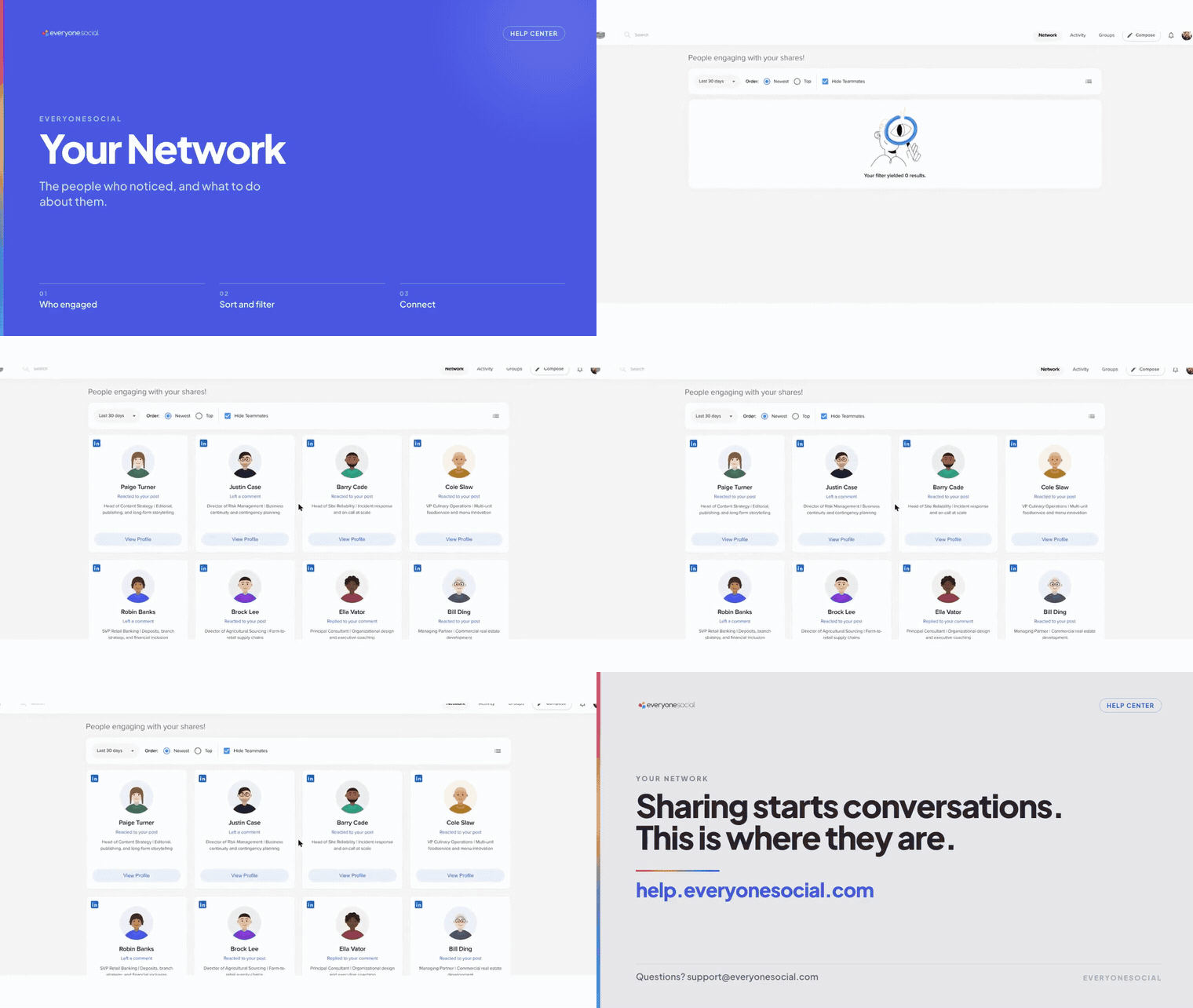
Your Network, and who engaged
Sharing content is only half of it. The value comes from who sees it and what you do next. This article covers the Network tab, which shows you the people actually engaging with your shares, and the habits that grow that list over time.
See who is engaging
Click Network in the top navigation. It answers a question your share counts cannot: not how many people engaged, but which people.
The controls worth knowing:
- Date range. Defaults to the last 30 days.
- Newest and Top. Newest for following up on recent activity, Top for the people engaging with you repeatedly.
- Hide Teammates. Switch this on. Colleagues supporting each other is good for morale, but it is not the audience you are building.
This includes engagement on shares you made natively on LinkedIn as well as through EveryoneSocial, so the picture is of your actual professional presence rather than one tool's slice of it.
What to do with the list
Most people look at the Network tab once, find it interesting, and never act on it. The list is worth more than that. Someone who engaged with your post has already raised their hand.
Three groups worth your attention:
- People who engage more than once. Sort by Top. Repeat engagement is the clearest signal of genuine interest anywhere in the product. These are the connection requests and conversations most likely to land.
- People at companies you care about. A prospect, a target employer, a partner. Their engagement is a warm opening that did not exist before you posted.
- People you do not recognize. If someone outside your circle is engaging, your content is reaching past your immediate network, which is exactly what you want.
The follow-up does not need to be a pitch. Commenting on something they posted, or a connection request that references the thing they engaged with, is enough to turn a metric into a relationship.
Habits that grow the network
Comment properly, and comment first
Commenting is the most underrated thing you can do. A substantive comment on someone else's post puts you in front of their audience, and it makes you far more likely to see their next post.
Two things separate a comment that works from one that does not:
- Say something. A sentence or two that adds a point, disagrees usefully, or asks a real question. "Great post" is noise, and both the reader and the platform treat it that way.
- Be early. Engagement in the first hour after something is published does far more for its reach than the same comment a day later. That makes early comments genuinely valuable to the author, and valuable things get remembered.
Ten thoughtful comments a week beats fifty reflexive ones. Volume without substance is the pattern platforms have gotten good at recognizing.
Reply to the comments on your own posts
When people comment on something you shared, answer them, and answer while the conversation is live. A post with a real thread under it holds attention longer than one with a row of reactions, and holding attention is what earns further distribution.
Follow the people whose work you want in your feed
Connect with customers, prospects, colleagues, people doing interesting work in your field, and people at companies you would like to work with. Your feed is a working tool. What you follow determines what you have to say.
Celebrate other people
Posts that congratulate someone, credit a colleague, or recommend a tool that solved a problem are some of the most effective content you can publish, because they bring other people into your orbit rather than asking for attention.
When you do this on LinkedIn, remember you can mention company pages only, never people. LinkedIn does not allow tagging personal profiles from a third-party tool. If you want to credit a person by name, tag their company in the post and mention the person in a comment, or edit the post on LinkedIn afterwards to add the tag. See Mention People and Companies in Shares.
Make your profile worth landing on
Everything above sends people to your profile. A headline that says what you actually do, a current photo, and an About section written in your own voice do more for the outcome than another post does. Fix the profile before you optimize the posting.
Consistency beats intensity
A few posts a week, every week, builds a presence. Ten posts in a day followed by three quiet weeks does not. If keeping that rhythm is the hard part, schedule shares in one sitting rather than trying to remember daily. See Maximize Your Time Using the Scheduler.
Where to go next
- View Performance on a Share You Made for how a single share did.
- View Your Content and Stats Using Activity for your activity over time.
- Content Sharing Best Practices for what to share in the first place.
- Commenting Well, and Why It Beats Posting for how to comment so it counts, and what to do with the people who engage.
- Find Your Lane: Building Topical Authority for why a consistent subject earns wider distribution.
- From Advocate to Employee Influencer for the longer arc.
Questions at any point, contact Support.